Buying your first boat is exciting, expensive, and easy to get wrong if you focus on looks before function. A first-time boat purchase should start with clear buying criteria: intended use, passenger capacity, power type, operating costs, storage, and safety requirements. In practical terms, the best first boat is not the flashiest model on the lot; it is the one that matches where you boat, how often you go out, and what you can afford to maintain over several seasons. I have helped new owners compare pontoons, bowriders, center consoles, aluminum fishing boats, and small cruisers, and the same pattern appears every time: buyers who define their needs before shopping make better decisions and spend less correcting mistakes later.
When people search what to look for when buying a boat for the first time, they are usually asking several questions at once. What type of boat fits my lifestyle? How much boat can I safely tow and store? Should I buy new or used? Which inspections matter most? What ownership costs surprise beginners? These are the right questions, because the purchase price is only one part of the decision. Fuel burn, insurance, registration, marina fees, trailer condition, engine hours, and local weather all shape whether a boat feels like freedom or a burden. This guide explains the core factors first-time buyers should evaluate, and it serves as a hub for broader boat comparison and buying guide research across the Best Boats & Reviews topic.
Before comparing models, define a few key terms. Beam is the boat’s width at its widest point and affects stability, storage, and trailer fit. Draft is how much water the boat needs to float without hitting bottom, which matters in shallow bays and ramps. Deadrise describes the angle of the hull at the transom; deeper-V hulls cut chop better, while flatter hulls are often more efficient and stable at rest. Horsepower ratings show the maximum engine power the manufacturer allows. Capacity plates list passenger and weight limits for boats that carry them. Understanding these basics makes listings easier to decode and prevents sales language from masking practical shortcomings.
This topic matters because boats are durable goods with long ownership tails. Unlike many consumer purchases, a boat can keep generating costs and maintenance tasks every month, whether you use it or not. The right buying process reduces risk. It helps you compare options objectively, spot hidden defects, and choose a boat that builds confidence rather than intimidation. For first-time buyers, the goal is simple: get on the water safely, enjoy the intended activity, and avoid buying too much boat, too little boat, or the wrong boat entirely.
Match the Boat Type to How You Will Actually Use It
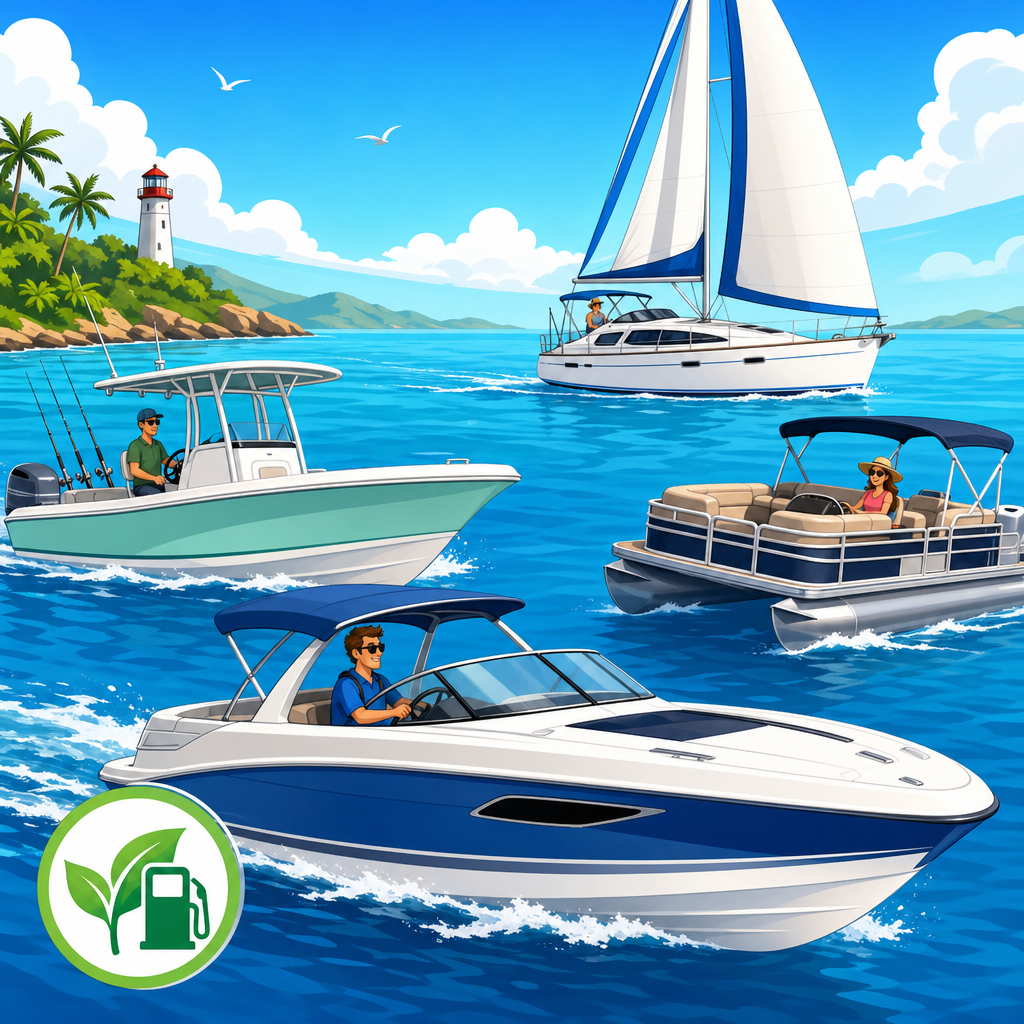
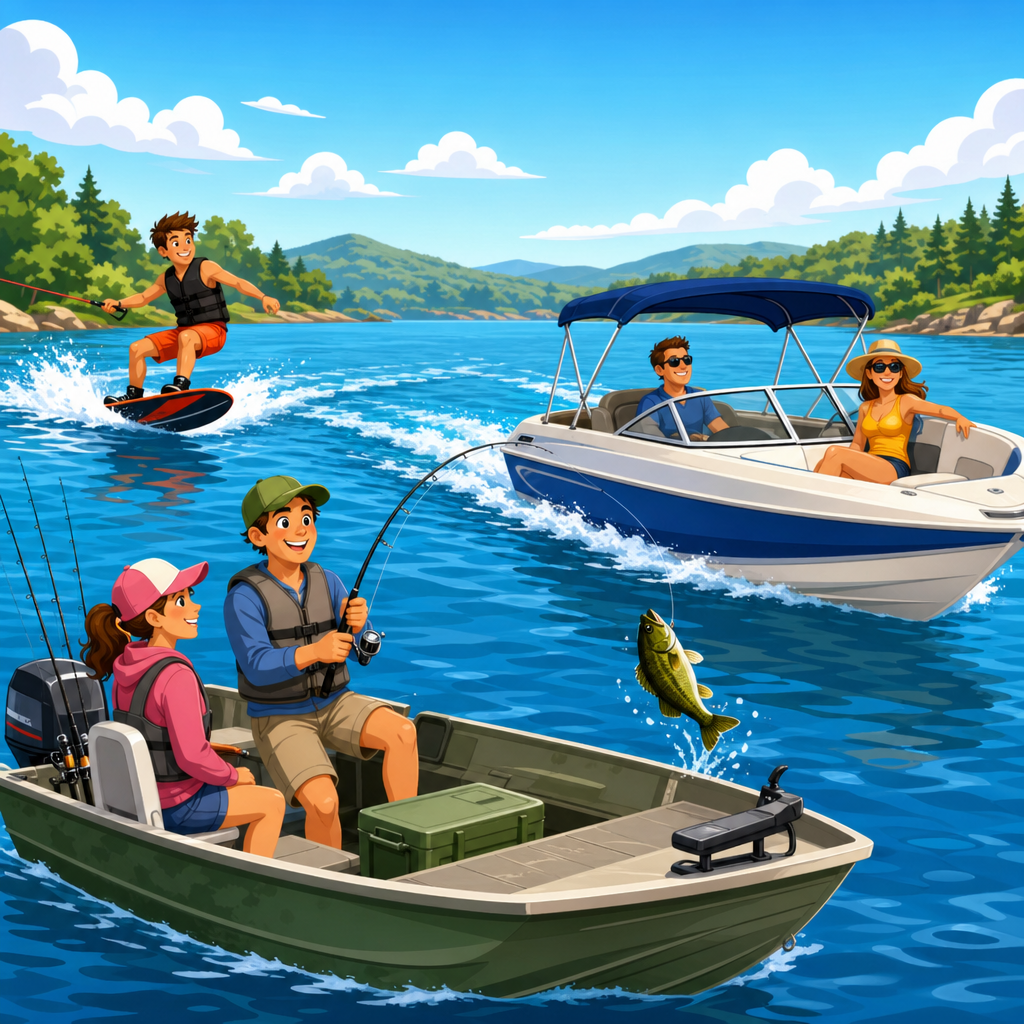
The first filter is use case, because boat categories are built around tradeoffs. A pontoon prioritizes space, comfort, and easy social cruising on lakes and protected water. A bowrider is versatile for day boating, towing tubes, and family outings, but it is not the strongest choice for rough offshore runs or dedicated angling. A center console is excellent for fishing, all-around deck access, and coastal versatility, especially with outboard power, but family seating and weather protection vary widely. Aluminum fishing boats are practical, durable, and often easier to tow and maintain, especially for freshwater buyers. Small cruisers add overnight capability, enclosed heads, and more systems, but they also introduce higher cost and complexity.
I usually tell first-time buyers to write down their top three activities and assign percentages. If your boating life is 70 percent sandbar cruising, 20 percent swimming, and 10 percent light towing, a pontoon or deck boat is likely better than a center console. If it is 60 percent inshore fishing, 25 percent family rides, and 15 percent island hopping, a center console or dual console may fit better. Buyers often imagine every possible use and shop for a boat that can do all of them. That usually leads to compromise without excellence. It is smarter to buy for the activity you will do most often and accept that no boat dominates every scenario.
Water conditions matter just as much as activity. A 19-foot lake boat that feels perfect on calm inland water may pound badly in open coastal chop. Conversely, a deeper-V offshore hull can be less stable at rest for casual family swimming. In places with tidal swings, shallow ramps, or sandbars, draft and hull design become critical. In the Pacific Northwest, weather protection and cold-water practicality can matter more than sun pad space. In Florida, corrosion resistance, shade, and saltwater-capable hardware deserve extra scrutiny. The best boat comparison starts with where you launch, not just what you admire online.
Set a Realistic Budget Beyond the Purchase Price
First-time buyers commonly underestimate total ownership cost by focusing on monthly payment or sticker price. A better method is to calculate first-year and annual operating cost separately. The first year often includes tax, registration, safety gear, initial servicing, trailer upgrades, electronics, lines and fenders, and sometimes storage deposits. Annual costs then include fuel, routine engine service, winterization in colder climates, hull cleaning, insurance, launch fees or marina charges, battery replacement cycles, and wear items such as impellers, trailer tires, brakes, and pumps.
For a practical example, a used 20-foot bowrider priced at $28,000 may require several thousand dollars more almost immediately. Sales tax and registration can be significant depending on state. Insurance varies by location, experience, horsepower, and boating history. A pre-purchase marine survey and engine inspection cost money, but skipping them can be far more expensive. If dry-stack storage or a wet slip is needed, monthly fees may rival a vehicle payment. Fuel burn also changes dramatically by boat type and engine package. A modest aluminum fishing boat with a small outboard can be inexpensive to run, while a larger sterndrive or twin-engine setup can multiply operating cost quickly.
Financing deserves caution. Longer loan terms can make a larger boat seem affordable while obscuring the real cost of ownership and potential depreciation. Boats are discretionary assets, and values vary by brand, maintenance history, market demand, and engine hours. If your budget is tight, buying a simpler used boat with a strong service record is often wiser than stretching for a larger new model. Leave room for maintenance and training. A boat becomes enjoyable when upkeep is manageable, not when every repair feels like an emergency.
Compare New and Used Boats With a Clear Checklist
New boats offer warranty coverage, modern layouts, updated electronics, and fewer immediate repair surprises. They also carry higher upfront cost, stronger early depreciation in many segments, and dealer prep fees that buyers sometimes overlook. Used boats can deliver better value and may include trailers, covers, trolling motors, or electronics that would be expensive to add later. The risk is hidden neglect. A shiny hull and clean upholstery do not prove mechanical health, structural integrity, or proper winterization history.
When comparing new versus used, I look at complexity first. For beginners, simpler is usually better. A single outboard is easier to inspect, service, and repower than many sterndrive setups, and outboards have become dominant in much of the market for good reason: easier access, strong resale, and fewer drivetrain components inside the hull. That does not make sterndrives bad, but it does mean a beginner should understand bellows, gimbal bearings, corrosion exposure, and transom assembly maintenance before buying one. Older inboards, cabin systems, and generator-equipped cruisers can offer value, yet they demand more technical confidence.
| Buying Factor | New Boat | Used Boat |
|---|---|---|
| Upfront cost | Highest | Usually lower |
| Warranty protection | Strongest coverage | Limited or none |
| Immediate maintenance risk | Generally low | Depends on history and inspection |
| Depreciation | Often steeper early | Typically slower if bought well |
| Included accessories | May cost extra | Often included |
| Inspection importance | Still important at delivery | Essential before closing |
A used boat checklist should include title verification, hull identification number matching, service records, engine hours, compression or diagnostic data when applicable, trailer VIN and title, tire age, brake function, bunk condition, battery age, bilge pump operation, livewell and plumbing tests, navigation lights, electronics startup, upholstery condition, signs of rot or soft spots, transom integrity, corrosion, and evidence of water intrusion. A sea trial is not optional. You want to see cold starts, idle quality, planing behavior, steering feel, full-throttle performance within manufacturer RPM range, trim response, and whether gauges work correctly. If the seller resists inspection or sea trial, walk away.
Inspect Hull, Engine, and Trailer Like They Are Separate Purchases
Many first-time buyers treat the boat package as one item, but the hull, engine, and trailer each deserve independent evaluation. Hull condition tells you about structural history and care. Look for gelcoat cracks around stress points, repairs with poor color match, moisture intrusion, damaged chines, corroded fittings, loose hardware, delamination, and soft decks. Cosmetic scratches are common and usually manageable; structural damage is different. On fiberglass boats, check stringer and transom areas carefully. On aluminum boats, inspect welds, rivets if applicable, keel wear, and signs of impact or electrolysis.
The engine is usually the most expensive mechanical component. For outboards, ask for maintenance records showing water pump service, gearcase lube changes, thermostat or spark plug intervals, and any warranty or dealer work. Modern outboards from brands such as Yamaha, Mercury, Suzuki, and Honda often allow dealers to pull engine data, including hours by RPM band and fault history. That information is valuable because 400 mostly low-speed hours can be very different from 400 hard commercial-style hours. For sterndrives, inspect bellows, manifolds and risers, corrosion, and service access. Cooling system neglect, saltwater exposure, and poor winterization can turn a bargain into a rebuild.
The trailer is where many bad deals hide. A solid boat on a failing trailer is still an expensive problem. Check frame rust, especially inside boxed sections, axle condition, brake lines, actuator operation, hub temperature after towing, tire date codes, winch strap wear, bunk carpet, rollers if fitted, lighting, and whether the trailer is appropriately rated for the boat with fuel and gear. Also confirm that your tow vehicle can handle gross trailer weight, tongue weight, and braking demands. Towing stability is a safety issue, not a convenience issue.
Prioritize Safety, Storage, and Ease of Ownership
The best first boat is one you can launch, retrieve, clean, and store without dread. Ease of ownership is often more important than absolute capability. A 17- to 21-foot boat is a practical range for many beginners because it balances usable space with manageable towing, maintenance, and docking. Bigger boats offer comfort and status, but they can also raise slip costs, fuel burn, insurance, and handling stress. If you are nervous at the ramp, ownership frequency drops fast.
Safety begins with capacity, freeboard, and layout. Make sure there is enough secure seating for how many people you realistically bring, not how many you occasionally imagine hosting. High freeboard helps families with children feel safer. Non-slip surfaces, sturdy boarding ladders, accessible grab handles, and clear walkways matter more than premium upholstery. Essential gear includes properly sized life jackets, throwable flotation where required, visual distress signals where required, fire extinguishers, sound-producing devices, anchor and rode, dock lines, fenders, and a basic first-aid kit. In coastal or large-water environments, a fixed-mount VHF radio, chartplotter, and emergency position-indicating options can be more than nice extras.
Storage is another make-or-break factor. Measure garage door height, overall trailer length, folded tower height, and beam before buying. Check local HOA rules, marina waitlists, and dry-stack dimensions. I have seen buyers close on a boat and then discover it will not fit the side yard, storage building, or local indoor rack. Ease of cleaning also matters. SeaDek-style foam flooring, snap-in carpet, enclosed heads, canvas, and bright white upholstery all affect maintenance time. If a boat requires too much effort after every outing, you will use it less.
Use Reviews, Brand Support, and Dealer Reputation to Reduce Risk
Boat reviews are useful only when you read them critically. Manufacturer brochures emphasize ideal conditions and top-trim features. Owner forums can reveal recurring issues, but they also overrepresent extreme positive and negative experiences. The most reliable picture comes from combining professional water-test reviews, owner feedback over time, dealer service reputation, and parts support. Brands with strong dealer networks and widely available components are often better choices for first-time buyers than niche brands with limited service reach, even if the niche boat looks more distinctive.
Pay attention to construction consistency, rigging quality, and resale history. Some builders are known for excellent fit and finish, others for value pricing, and others for specialized fishing layouts or rough-water hulls. None is automatically best for every buyer. What matters is alignment with your priorities and access to competent service. Call the service department before purchasing and ask about turnaround time in peak season, warranty process, and whether they service the engine brand you are considering. A great boat supported by a weak dealer can become frustrating quickly.
As a hub for boat comparison and buying guides, this page should lead your next research steps. After narrowing your shortlist, compare specific categories head to head: pontoon versus deck boat, bowrider versus dual console, aluminum fishing boat versus fiberglass bass boat, center console versus bay boat, and new versus used by budget tier. Then drill deeper into engine choice, trailer buying, marine survey standards, insurance planning, and first-year maintenance checklists. The smarter your comparison process, the less likely you are to buy based on emotion alone.
First-time boat buyers make the best decisions when they evaluate ownership as a full system rather than a single transaction. Start with real use, local water, and realistic crew size. Set a budget that includes taxes, fuel, storage, insurance, maintenance, and required gear. Compare boat types by strengths and tradeoffs, not marketing language. If buying used, insist on records, inspection, and sea trial. Examine hull, engine, and trailer separately. Favor simplicity, safety, service support, and storage practicality over features that look impressive on a showroom floor.
The main benefit of this approach is confidence. Instead of wondering whether you bought the wrong boat, you will know why your choice fits your waters, your budget, and your experience level. That confidence leads to more time on the water, fewer avoidable repairs, and a better long-term ownership experience. Use this guide as your starting point, build a shortlist, and then move into detailed comparisons for the specific boat categories that match your needs. The right first boat is the one you can use often, maintain responsibly, and enjoy from day one.
Frequently Asked Questions
What is the most important thing to decide before buying your first boat?
The most important first step is defining exactly how you plan to use the boat. Many first-time buyers make the mistake of shopping by appearance, brand reputation, or showroom excitement before they have identified their real needs. That usually leads to buying a boat that looks impressive but does not perform well for the way they actually boat. Start by asking practical questions: Will you use it for fishing, cruising, watersports, day trips with family, or quiet evenings on a local lake? Will you mostly boat on small inland lakes, large reservoirs, coastal bays, or offshore waters? How many people do you realistically expect to bring most of the time, not just on occasional holiday weekends?
These answers shape nearly every important buying decision, including boat size, hull design, engine type, seating layout, storage needs, and safety equipment. For example, a boat that works well for towing skiers on calm freshwater may not be the right fit for choppy coastal conditions. Likewise, a couple who wants simple weekend cruising may be much happier with an easy-to-maintain runabout than with a larger boat that adds complexity and cost without improving their experience. When I guide first-time buyers, I usually tell them to think in terms of function first, features second, and appearance last. If you start with intended use, you are far more likely to buy a boat that feels right not only on day one, but also after several seasons of ownership.
How do I choose the right boat size and passenger capacity for a first purchase?
Choosing the right size is about balancing comfort, usability, and long-term ownership costs. First-time buyers often assume bigger is automatically better, but a larger boat brings higher purchase prices, more fuel consumption, bigger storage requirements, more expensive maintenance, and a steeper learning curve at the dock and on the trailer. Instead of buying the largest boat your budget can stretch to, focus on the size that realistically supports your usual crew and activities. Think about your average boating day, not your biggest possible outing. If you usually go out with two to four people, there is little reason to pay for a boat designed to handle a much larger group unless you know that capacity will be used frequently.
Passenger capacity should be evaluated with comfort in mind, not just legal maximums. A boat rated for a certain number of people may technically carry them, but that does not always mean everyone will have enough seating, storage, and room to move safely. It is smart to consider not only how many people will come along, but also what they will bring, such as coolers, fishing gear, tow ropes, water toys, or overnight bags. Weight distribution and deck layout matter as much as the raw capacity number. For a first-time owner, a manageable boat that launches easily, docks predictably, and feels comfortable with your normal group is usually a much better decision than an oversized model that adds stress and expense every time you use it.
Should a first-time buyer choose an outboard, inboard, or sterndrive boat?
The right power type depends on where you boat, how you use the boat, and how comfortable you are with maintenance and ownership costs. Outboards are often a strong choice for first-time buyers because they are generally easier to service, simpler to winterize, easier to access for repairs, and widely used across many boat categories. They also free up interior space in many layouts and can be practical for freshwater lakes, bays, and general family boating. If low hassle and broad versatility are high priorities, an outboard-powered boat is frequently the most straightforward path for a new owner.
Inboards and sterndrives can still make sense, but they require more careful evaluation. Inboards are often associated with specialized uses such as wake sports or larger cruisers, where weight distribution and performance characteristics are important. Sterndrives can offer a blend of automotive-style power and good performance, but they may involve more maintenance complexity than some buyers expect, especially over time and in certain water conditions. For a first boat, you want a power setup that you understand, can afford to maintain, and can easily service in your area. It is also wise to research local mechanics, parts availability, fuel efficiency, and common maintenance requirements before committing. A boat is only enjoyable if you can keep it running reliably without being surprised by recurring service bills.
What ownership costs should first-time boat buyers budget for beyond the purchase price?
This is one of the most important questions a first-time buyer can ask, because the initial price is only part of the total cost of owning a boat. Ongoing expenses often catch new owners off guard, especially if they stretch their budget to afford the boat itself and leave little room for annual operating costs. In addition to the purchase price, you should plan for insurance, registration, taxes, fuel, routine engine service, winterization, cleaning supplies, safety gear, batteries, trailer maintenance if applicable, and repair reserves. If the boat will be kept at a marina, slip fees can be significant. If it will be stored dry, indoor or outdoor storage fees may apply. Even smaller boats can carry meaningful annual costs once all of these items are added together.
A smart approach is to estimate what the boat will cost you over several seasons, not just what it costs to bring home this month. Think in terms of total ownership. How much fuel will your boating style require? How often will you need maintenance? What happens if electronics fail or upholstery needs repair? Can your current vehicle tow the boat safely, or will towing create another expense? New buyers should also leave room in the budget for essential accessories such as life jackets, dock lines, fenders, anchors, covers, and emergency equipment. If you are honest about the full financial picture from the start, you are much more likely to choose a boat you can enjoy consistently instead of one that becomes stressful to own.
What safety and practical features should I look for in a first boat?
Safety and practicality should rank above luxury features for a first-time purchase. A good first boat should feel predictable, easy to board, easy to move around on, and easy to operate in normal conditions. Look for clear visibility from the helm, intuitive controls, secure handholds, non-slip deck surfaces, dependable navigation lights, and comfortable seating that does not interfere with safe movement. Storage matters more than many buyers realize because loose gear quickly creates clutter and safety hazards. A smart layout with dedicated space for life jackets, lines, anchors, and personal items makes the boat easier to use and safer for everyone onboard.
You should also pay attention to how the boat fits your local waters and your skill level. Freeboard, hull stability, boarding access, shade options, and weather protection can all affect comfort and safety. If you expect children, older passengers, or pets to come aboard, features such as easy boarding ladders, walk-through designs, enclosed seating areas, and simple access to safety gear become even more important. Before buying, confirm that the boat has the required safety equipment for your area and enough room to use that equipment effectively. For a first-time owner, the best boat is one that reduces friction, not one that adds complexity. A well-designed, practical boat makes routine outings easier, helps you build confidence faster, and gives you a much better chance of enjoying ownership for years rather than regretting the purchase after one season.